

PCB Design for High Speed Flexi
A flexi rigid enabling speed & power
The Tech
We were approached for help developing a flexi rigid for a military application.
This would need to cater for high speed and power signals while meeting critical resistance, crosstalk and mechanical specifications.
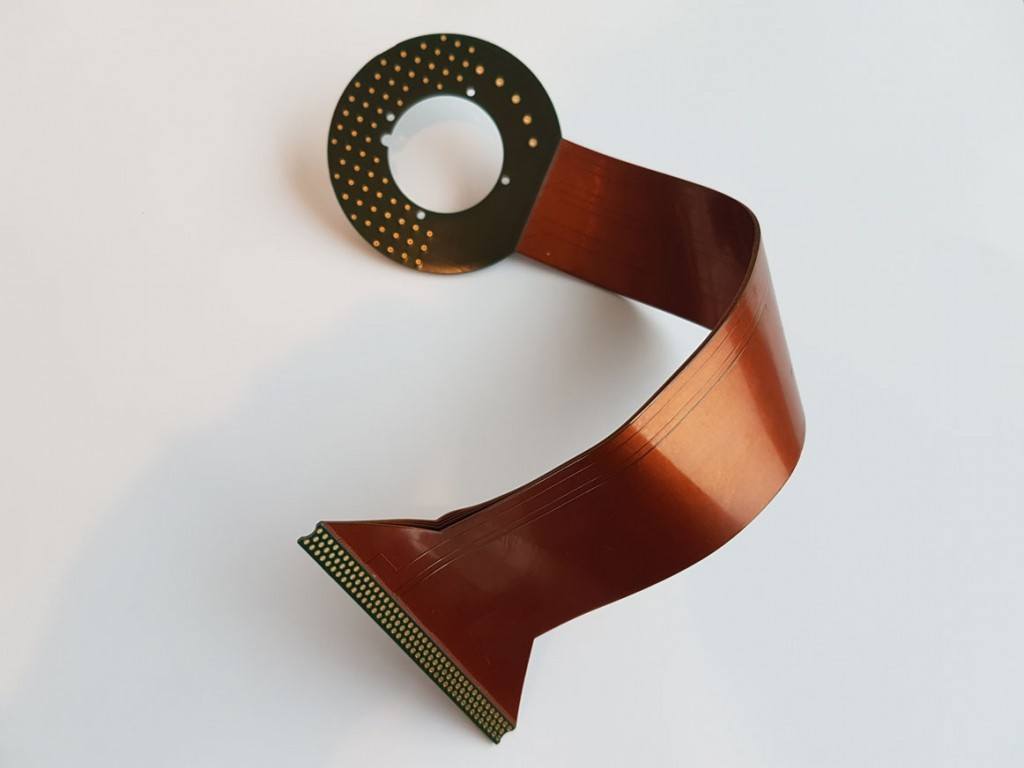
Our Brief
We needed to identify the right flexi rigid design technology and manufacturing requirements.
To ensure first time fit, we had to get the connectors and mechanical features perfectly aligned.
We also had to Identify all high speed design rules, impedance, skew, differential pairs, power rating and track widths to support the resistance ratings.
Our Approach
We developed a partition design between the high current and high speed signals, allocating signals to layers with the correct copper weight.
We carefully created the layer build in close collaboration with the flexi manufacturer.
Using high speed design software, we implemented and verified that our designs met all high speed rules.
Throughout, we constantly reviewed track resistance ratings, as small changes in length could make the signal non compliant.
The Results
We discovered that the copper thickness supplied to manufacturers could be at the lower end of the tolerance specification.
Once the flexi manufacturer had prepared materials for use, the finished copper thickness could be 20% less than expected. The design had to be constructed to allow for the copper weight to vary between minimum and maximum values to make sure resistance criteria were met.
We provided a track resistance calculator so the client could monitor ratings.
"Quantum added signicant value to this project from the outset.
Working closely with the manufacturer, Quantum developed a robust design that provided high yields in manufacture, meeting all design requirements regardless of raw material variations.."
Principal Engineer, Device Engineering